Liebestod
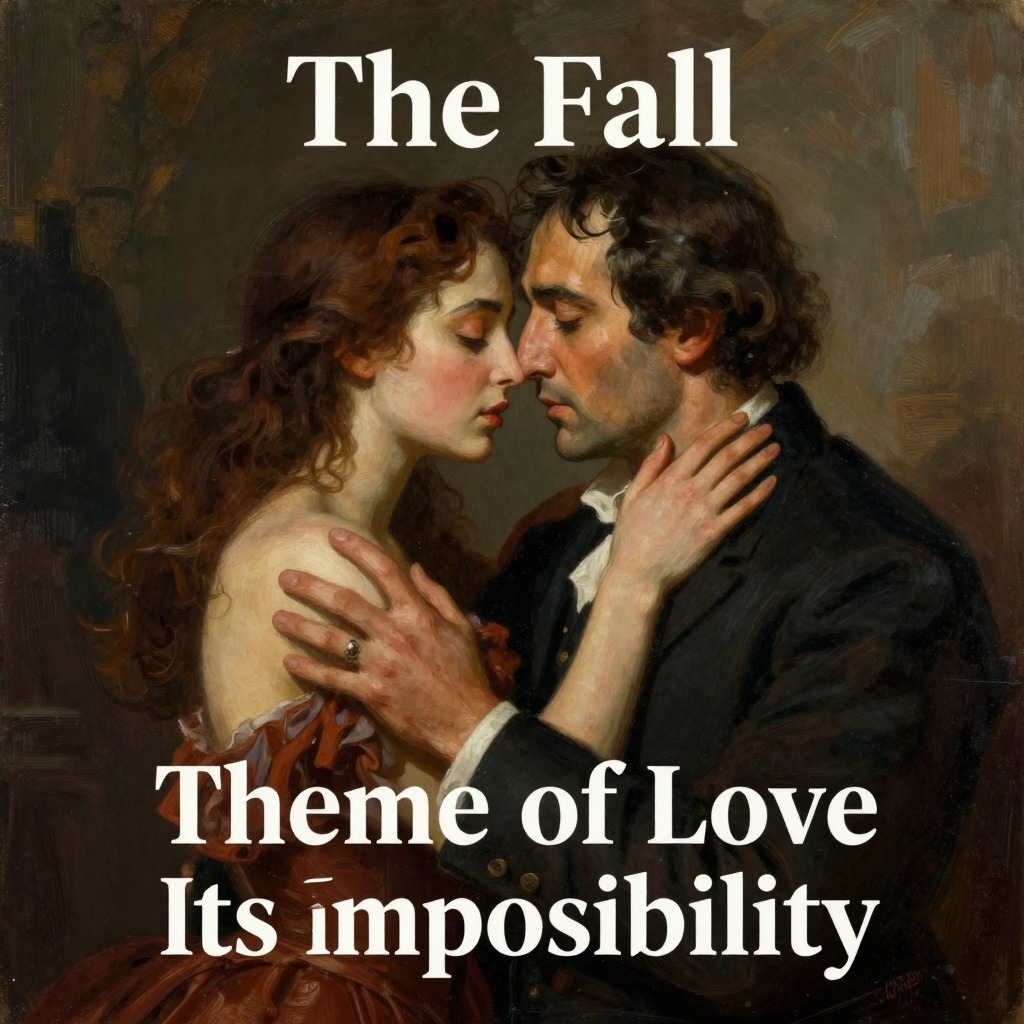
The Liebestod, the famous 'love-death' from Richard Wagner's opera Tristan und Isolde, appears in Jean-Baptiste Clamence's confession as a cultural and emotional reference point that crystallizes his lifelong failure to attain a transcendent, all-consuming love. Clamence mentions the Liebestod only once, but the context is decisive: after his disastrous attempt to find genuine passion through a series of relationships, he confesses that he conceived "such a loathing for love that for years I could not hear 'La Vie en rose' or the 'Liebestod' without gritting my teeth." The pairing of the Liebestod with the popular French song "La Vie en rose" is itself revealing—the former represents the romantic ideal of love so powerful it culminates in death, the latter a sentimental celebration of everyday happiness. Clamence's visceral, physical reaction (gritting his teeth) signals that both versions of love have become unbearable to him, not because he rejects them intellectually, but because they remind him of a desire he could never fulfill.
The Liebestod as a Symbol of Unattainable Transcendence
Clamence's earlier confession reveals that he once dreamed of "a total love of the whole heart and body, day and night, in an uninterrupted embrace, sensual enjoyment and mental excitement—all lasting five years and ending in death." This fantasy is a secular, personal version of the Liebestod: a love so absolute that it can only be consummated in mutual annihilation. Yet Clamence admits that this dream remained unrealized; he never found such a love, and his actual relationships were characterized by manipulation, conquest, and emotional detachment. The Liebestod thus functions as the unattainable ideal against which his actual romantic life is measured and found wanting. His inability to hear the music without gritting his teeth is the somatic symptom of this gap between aspiration and reality.
The Liebestod and the Failure of Debauchery
Clamence's turn to debauchery—alcohol, prostitutes, and anonymous sex—was a deliberate attempt to silence the laughter that haunted him and to find a substitute for the immortality he craved. He describes debauchery as "a substitute for love, which quiets the laughter, restores silence, and above all, confers immortality." But this substitute proved hollow; the Liebestod, as the musical embodiment of the love he could not achieve, became a tormenting reminder of what he had failed to experience. His loathing for the Liebestod is therefore not a rejection of Wagner's music but a rejection of the self that could not live up to its promise. The motif marks the boundary between Clamence's former self, who still believed in the possibility of transcendent love, and his present self, who has settled for the cynical comforts of the judge-penitent.
The Liebestod and the Structure of Clamence's Confession
Clamence's narrative is itself a kind of inverted Liebestod: a confession that seeks to achieve a form of death-in-life, a permanent state of judgment and self-accusation that replaces the possibility of genuine love or redemption. The Liebestod, with its promise of ecstatic union through death, stands in stark contrast to Clamence's actual solution, which is to live on in a state of perpetual, theatrical guilt. His gritting of teeth at the sound of the Liebestod is the audible sign of a man who has chosen a living death over the risk of a real one. The motif thus serves as a musical and thematic counterpoint to Clamence's entire project: where the Liebestod offers transcendence through love and death, Clamence offers only the endless, self-serving performance of penitence.